Monday, November 20, 2017

Week 8 - Databending & Glitch

This week we worked on databending & glitch.

Databending is manipulating a file of a certain format using software designed to edit files of a different format.

We sued Audacity which is software created to edit sound. Therefore when inserting pictures it created weird glitches all over the picture. 

Below are the final images that I achieved by databending. 


We also got rid of some of the coding within the picture, this manipulate the picture further. As seen in this picture where it swapped the position of the people. 


Thursday, November 16, 2017

Week 7 - Flash Photography

Flash + Light Photography

This week we worked with flash photography.
There are several types of flash photography


  1. Front Flash - This is when thelight is directed straight on to the subject of the photo.
  2. Bounce Flash - This is usually with a flash unit added on tot he camera. Making you able to angle the flash head to bounce light off of a cieling or wall onto the subject.
  3. Fill Flash - This brings light to the foreground which then helps to balance the light on the subject.


Below are some of the photos I took in the workshop.


Wednesday, November 15, 2017

Week 7 - Cultural imaginaries & landscape photography

This week we discussed Cultural imaginaries & landscape photography.

Cultural Imaginaries are socially constructed to fit the needs of a particular group or subject.

Landscape photograhy is photography of natural scenery.

It's interesting how photographers use editing of landscape photography to create an imaginary landscape.


Esteban Pastorino, an Argentinian photographer. He has exhibited his work in different countries. 


“I wanted to create an ambiguous image that resembles the way we look at the scale models but photographing the real world." 

I think it's interesting how he uses blur and considers lines and point oof view.   

In the first image he has used a high point of view and managed to capture a depth of field. 

Whereas in the 2nd one it seems as if we are looking through something but still uses depth of field to bring our attention to a particular part of the photo.


Mishka Henner, a Belgium photographer.

An artist that is inspired by google images and how the internet has changed our visual experiences.


Monday, November 13, 2017

Friday, November 10, 2017

Week 6 - Mind Map

This is a rough mind map for my project.

I will be using the studio, so will use a mixture of flash photography.

Wednesday, November 8, 2017

Week 6 - Project idea


Elevator pitch from MishFish


Above is my Elevator Pitch presentation. My idea was to use fashion to represent youth culture. Taking a varied range of photographs of the subject in the studio and some in settings they are familiar with.

Test Shots
I took some test shots of my friend in her garden. As it was a nice sunny day I tried to use the natural light and create shadows on her to give the photos some depth.


Monday, October 16, 2017

Week 3 - Vernacular Photography

This week we were taught about vernacular photography.

What is vernacular Photography?
It is photos of everday life and objects.
One may not realise but everyone takes vernacular photographs. Especially in this modern age of smart phones. Photos that one takes with friends or photos taken on a holiday are vernacular photographs.

August Sander was one of the first photographers of vernacular photography. He took photos of people living their lives in Germany. This work was known as Citizens of the 20th Century. His aim was to not stage photos but instead to show their real life.
Image result for august sander vernacular photographyImage result for august sander vernacular photography


Martin Parr used vernacular photography to show the lives of people in Britain.

 Image result for martin parr vernacular photographyImage result for martin parr vernacular photography


Below are some of my photos which I took on holiday and are considered vernacular photography.

I took this photo of my friend and a police officer on Brooklyn bridge

This photo was taken on the subway and shows the everyday life of commuting passengers.


 This is one my favourite photographs that I have taken. I happened to be walking past as this couple was doing their wedding shoot, I managed to capture them as they were on the zebra crossing.

Tuesday, October 10, 2017

Week 3 - Street Photography

This week we were given the task of going into brighton and collecting a series of street photography. We were told to capture as many as 150 photographs.


 It was a hard task, as I was not that confident or comfortable in taking photos of strangers.  Therefore most the photos I did take were with peoples walking by or with their backs facing towards me. It was also hard to focus on the subject as they would be moving.


As I did not feel that comfortable in taking photos of people and it started to get dark which mae it more difficult for me to focus on moving subjects. I decided to take a few of the streets, graffiti and buildings. 


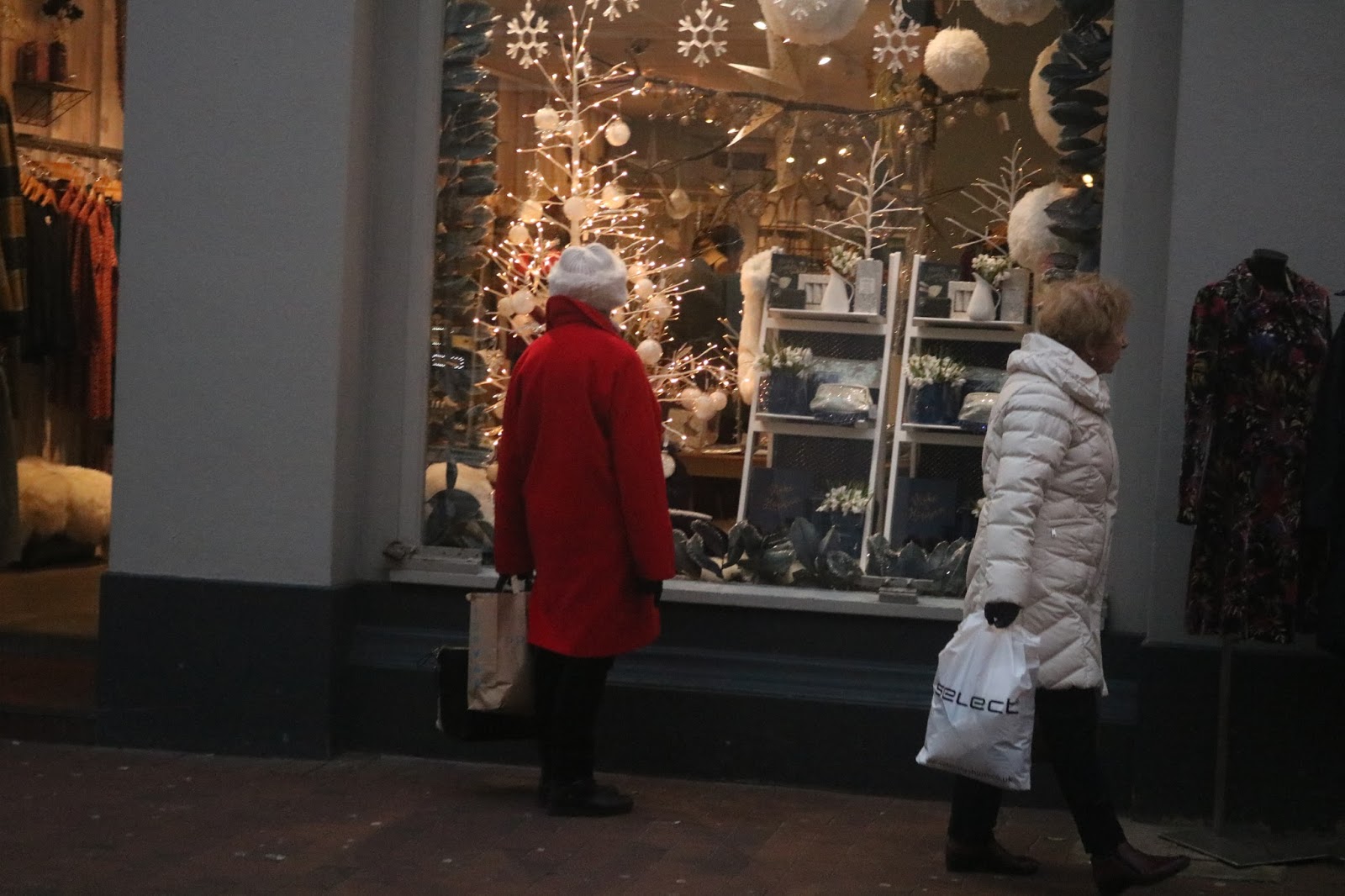
I particularly like this picture, as I took it through the shop window in the lanes. I feel the window creates a sense of border and as it was dark outside, the lighting brings out the subject of the photo. 

\

I like this photo as the light from the shop window bring light onto the girl in the red jacket making her the focus of the image. 


Monday, October 9, 2017

Week 3 - Depth of Field

In this session we worked with depth of field. Placing different objects and changing the focus from a broader depth of field to focusing on a specific objects.


I did not manage to achieve this completely, however if you look closely at the nescafe and milk you can see the change from blur to slightly more focused.


Saturday, October 7, 2017

Week 3 - Gender, gaze, otherness and photography

This week we discussed gender, gaze, otherness and photography.

Gender can be represented many differnet ways in photography. it can be argued that gender is a social construct and in fact gender creates otherness. As it seperates one from another.

Gaze, a steady intent look . A term used by media theorists refering to the way people gaze at an image. There are different types of gazes used in photography.  Spectator gaze and direct gaze being two types.

Otherness, is the quality of fact of being different. This would be photographing things that not everyone percieves as beautiful or would even consider.

Nan Goldin, an American photographer. Her work is known for featuring LGBT themes. She is also well known for photagraphing people, representing their gender and sexuality.


Diane Arbus, an American photographer who is known for taking photos of marginalised people. An example of otherness in photography.


Thursday, October 5, 2017

Week 2 - Shutter Speed and Movement

This week we learnt about depth of field, shutter speed and focus.


This image is the one I think works best, as I managed to focus on the moving vehicle but have the background blurred and isn't in focus. If you look closely you can even make out the driver and passenger.


The front of the vehicle is also in focus which contrasts nicely with the blur behind.

I feel the photo below with the motorbike is the worst of the photos I captures, this is because I did not mange to focus on anything and the whole picture is a blur, however this creates a sense of movement and perhaps is quite interesting. 


We also did a task of jumpology, here we found a focus point and then got the subject to jump, taking pictures on the multiple photo setting. Tis created a sort of flipbook animation when looking through the photos. 

I feel the photo above is the one that worked best as I managed to capture both the people in the air. 


Week 12 - Web Gallery